case study

Shiplink ran on manual document handling and fragmented compliance checks. OTAKOYI replaced that with an AI-augmented platform — automating document intake, digitizing deal workflows, and adding predictive analytics.


TECHNOLOGY STACK

REACT

NEXT.JS

TAILWIND CSS
Shiplink's brokerage operations depended on manual processes at every stage: documents exchanged offline, deal terms negotiated over email, and counterparty verification handled through fragmented third-party checks. As deal volume grew, the operational cost of this approach became unsustainable.
The client needed a platform that could handle the full brokerage cycle digitally, from counterparty onboarding and compliance verification through to deal negotiation, document management, and freight planning. Critically, automation had to be embedded into the workflow from the start, not bolted on later.
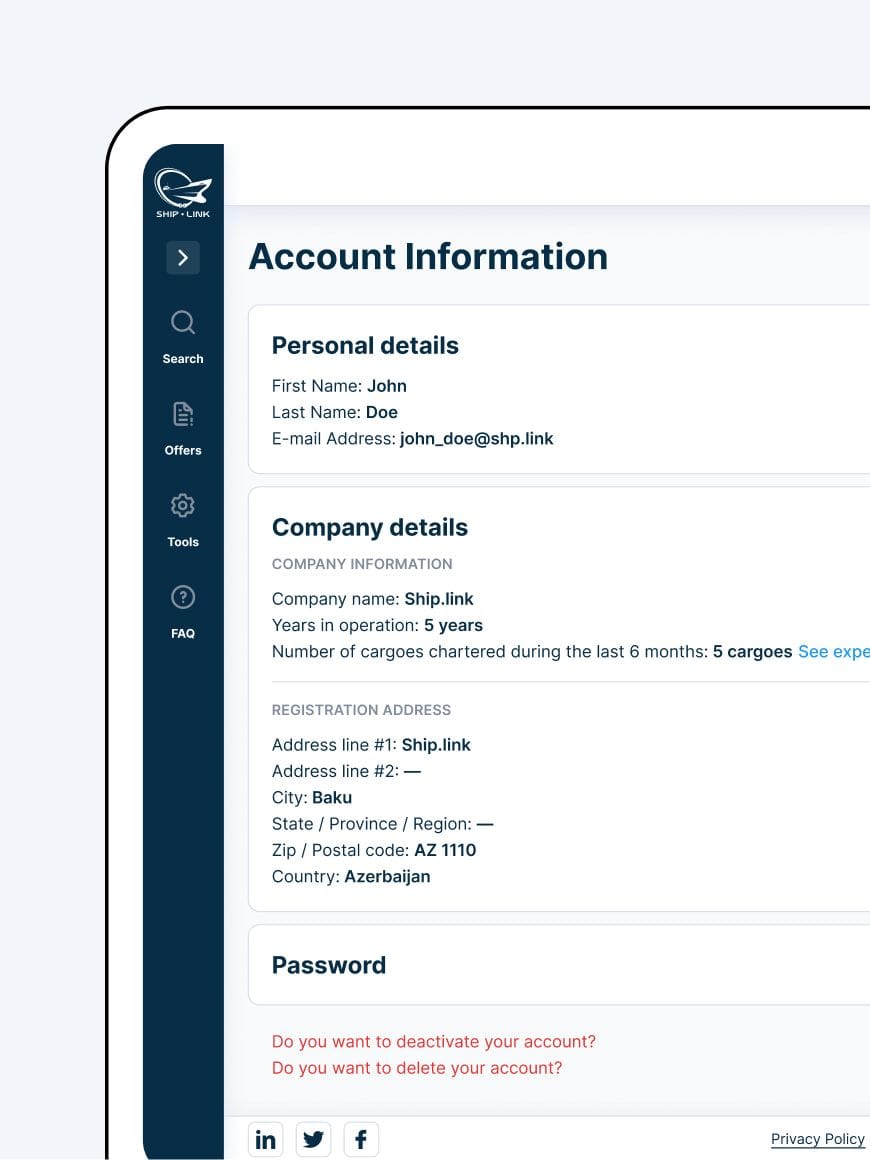
We began with a process audit across Shiplink's core brokerage operations, including mapping document flows, deal negotiation steps, counterparty verification, and freight planning touchpoints. Each workflow was assessed for automation potential before a single line was built.
From there we designed the full solution architecture and built each automation in parallel with Shiplink's backend team — validating every integration end-to-end before go-live. DevOps and QA were embedded throughout for platform stability and continuous delivery.
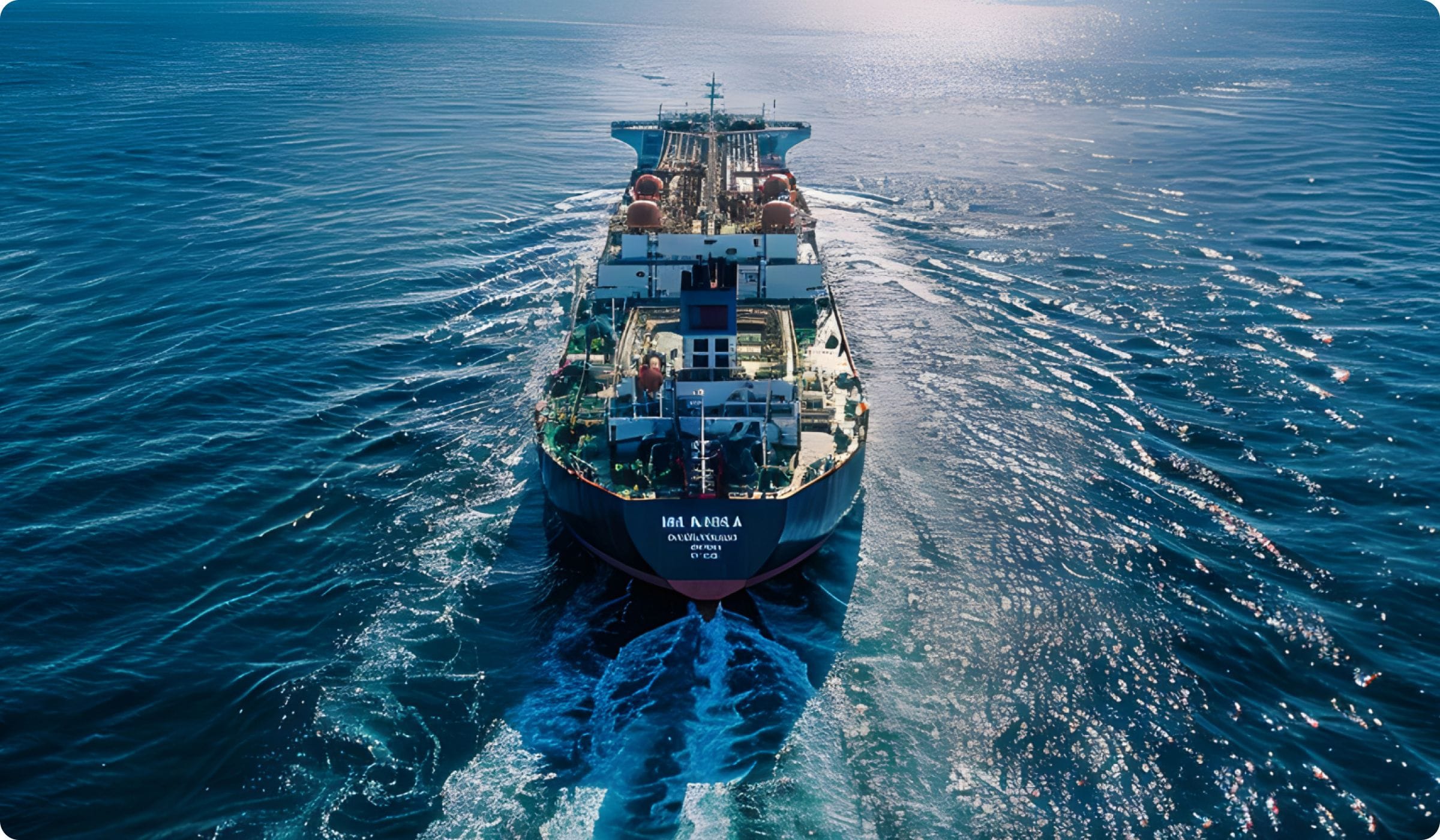
Three roles, one operational environment — the Shiplink platform gives charterers, vessel owners, and the brokerage team distinct toolsets that cover their specific part of the deal cycle, with automation handling repetitive work in the background.
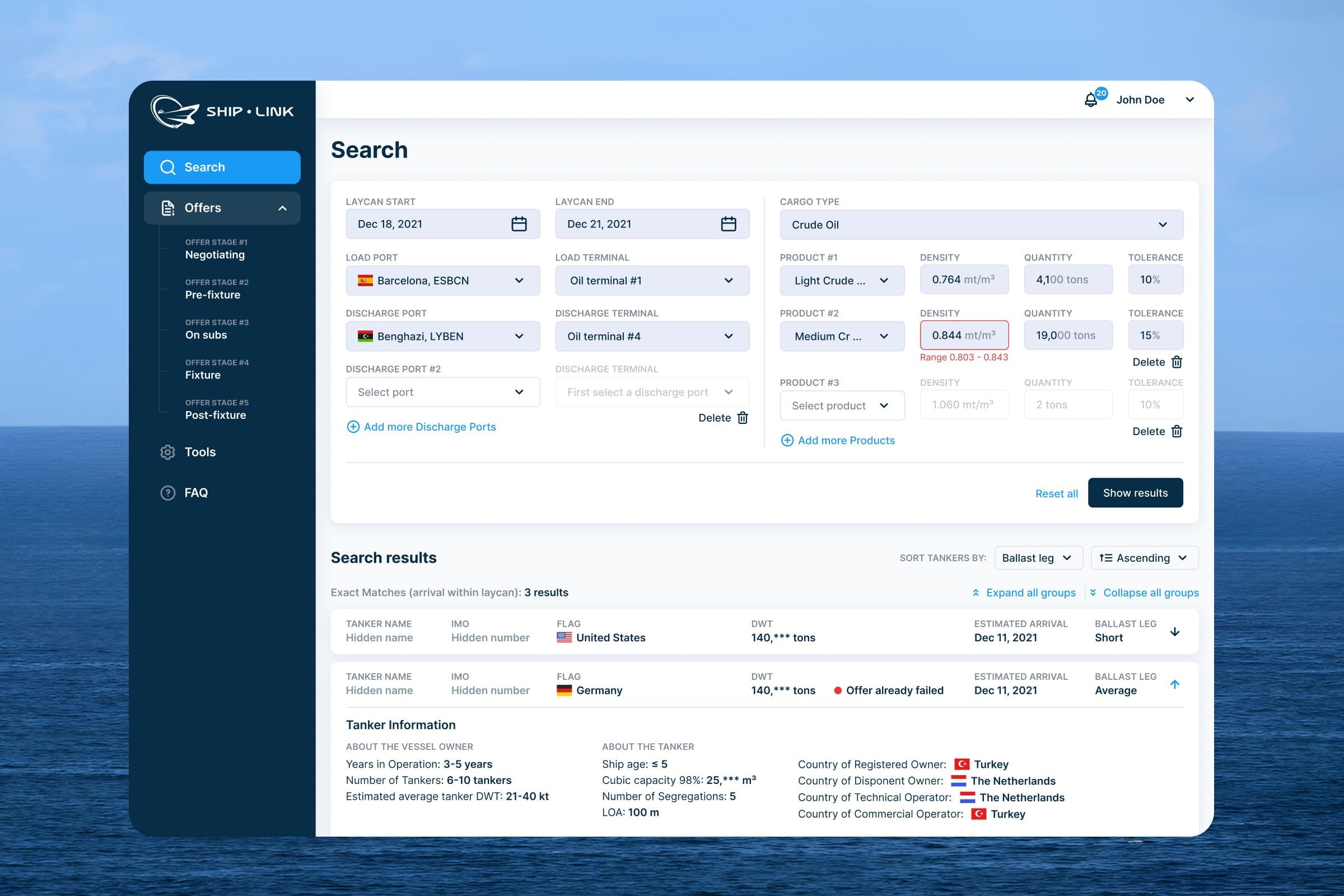
The platform functionality covers all the crucial aspects of managing shipments for charterers.
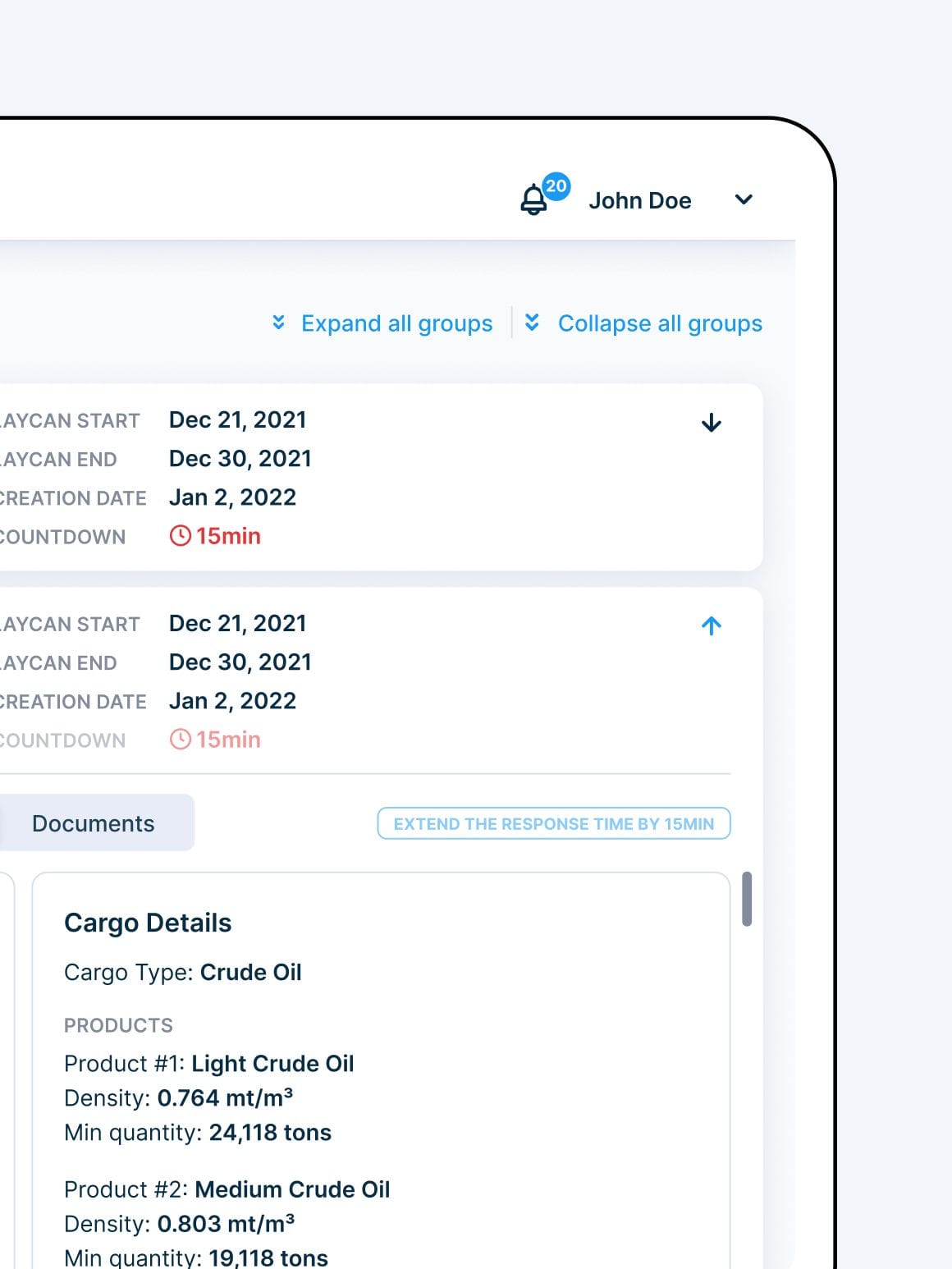
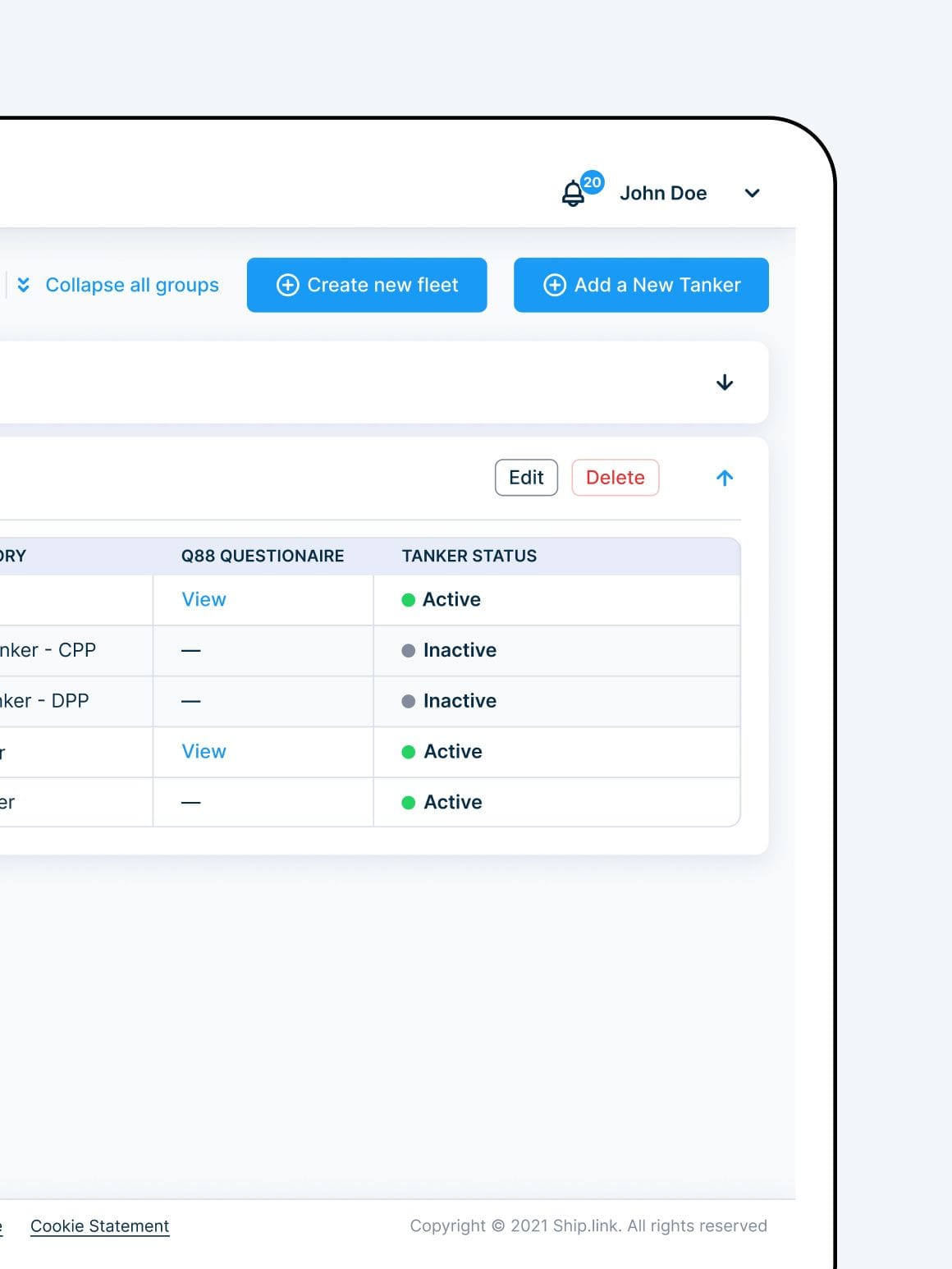
Vessel owners get full visibility over their fleet and incoming deals with automated alerts and document handling replacing the manual coordination.
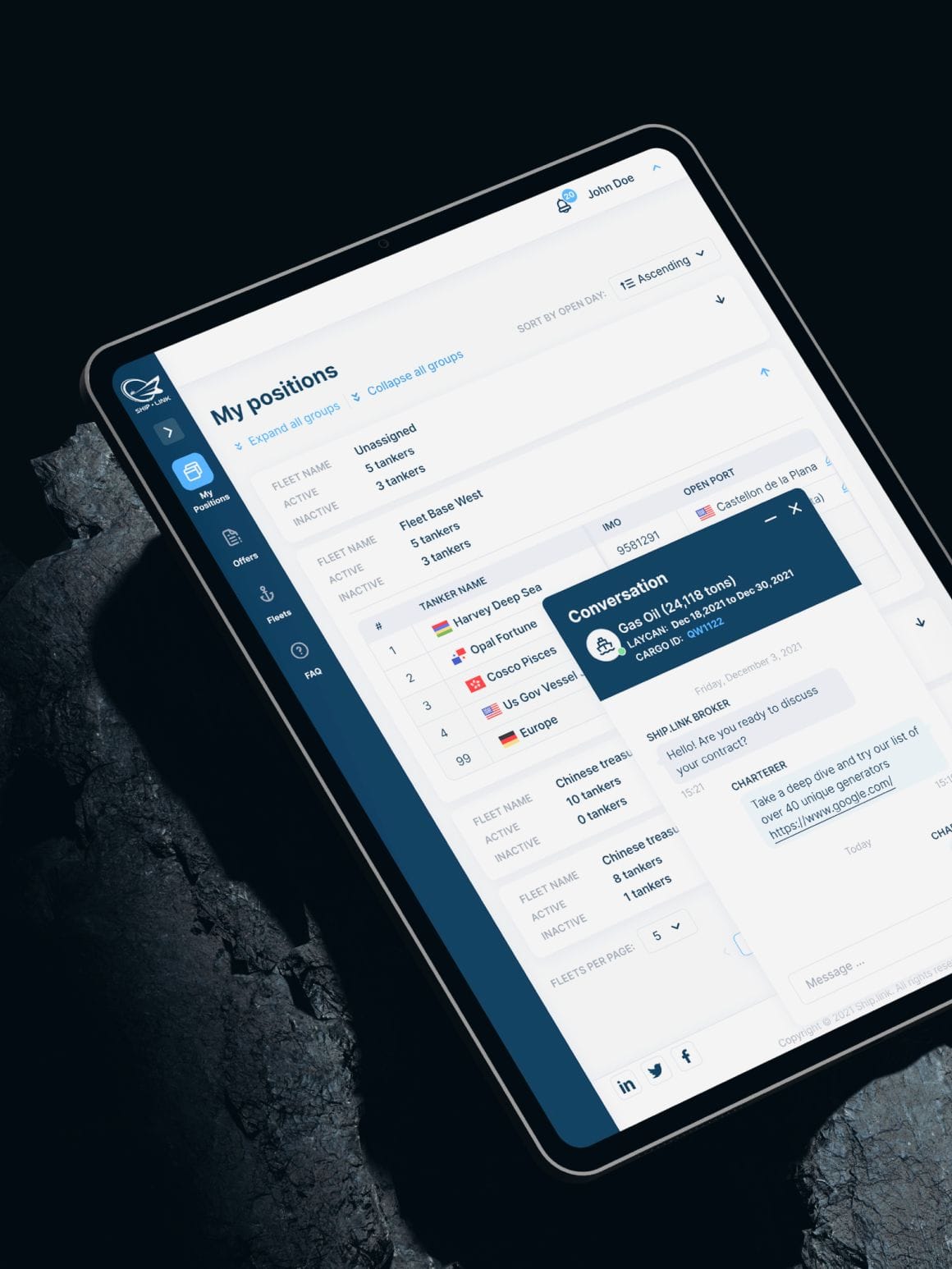

Every industry has specific requirements for software solutions, and each business within that industry also has unique processes that need to be addressed with software.
Shiplink had several interesting features that needed to comply with their business specifics. The creation of these features helped our client fully transition from offline to online processes.
Shipping brokerage operates across multiple jurisdictions — maritime regulations, sanctions lists, cargo documentation requirements, and port authority rules change continuously.
OTAKOYI integrated an AI-powered regulatory monitoring directly into the Shiplink environment. The system tracks regulatory sources relevant to Shiplink's operations, flags changes that impact active deals or counterparties, and converts them into structured obligations with assigned owners and deadlines.
On the Shiplink platform, document handling is automated end to end across the full deal lifecycle:
Automated document intake
Uploaded documents are extracted, classified, and linked to the relevant deal automatically, eliminating manual sorting and filing
Charter party generation
Deal terms agreed on the platform populate charter party drafts automatically, reducing preparation time and manual transcription errors
Version control and audit trail
Every document revision is tracked with a full timestamp history, giving both parties and the Shiplink team a single source of truth at every negotiation stage
Bill of lading processing
AI extracts and validates cargo details against deal terms, flagging discrepancies before they reach the counterparty
Freight invoice automation
Invoices are generated from closed deal data and routed for approval without manual input
Document status tracking
Outstanding, pending, and completed documents are surfaced in real time across all active deals, so nothing falls through the cracks
In traditional shipping brokerage, deal negotiation happens across emails, phone calls, and disconnected documents with no single source of truth.
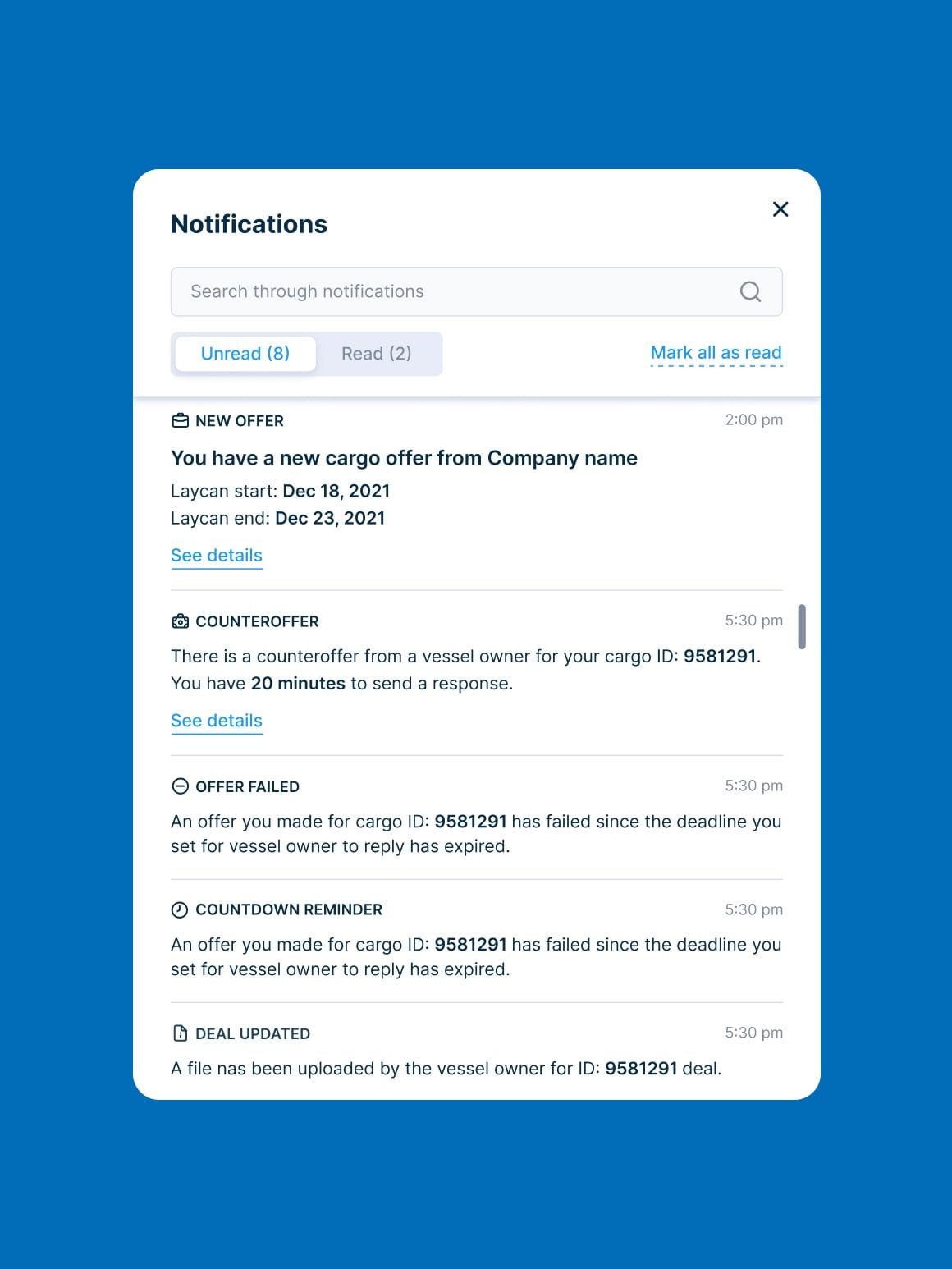
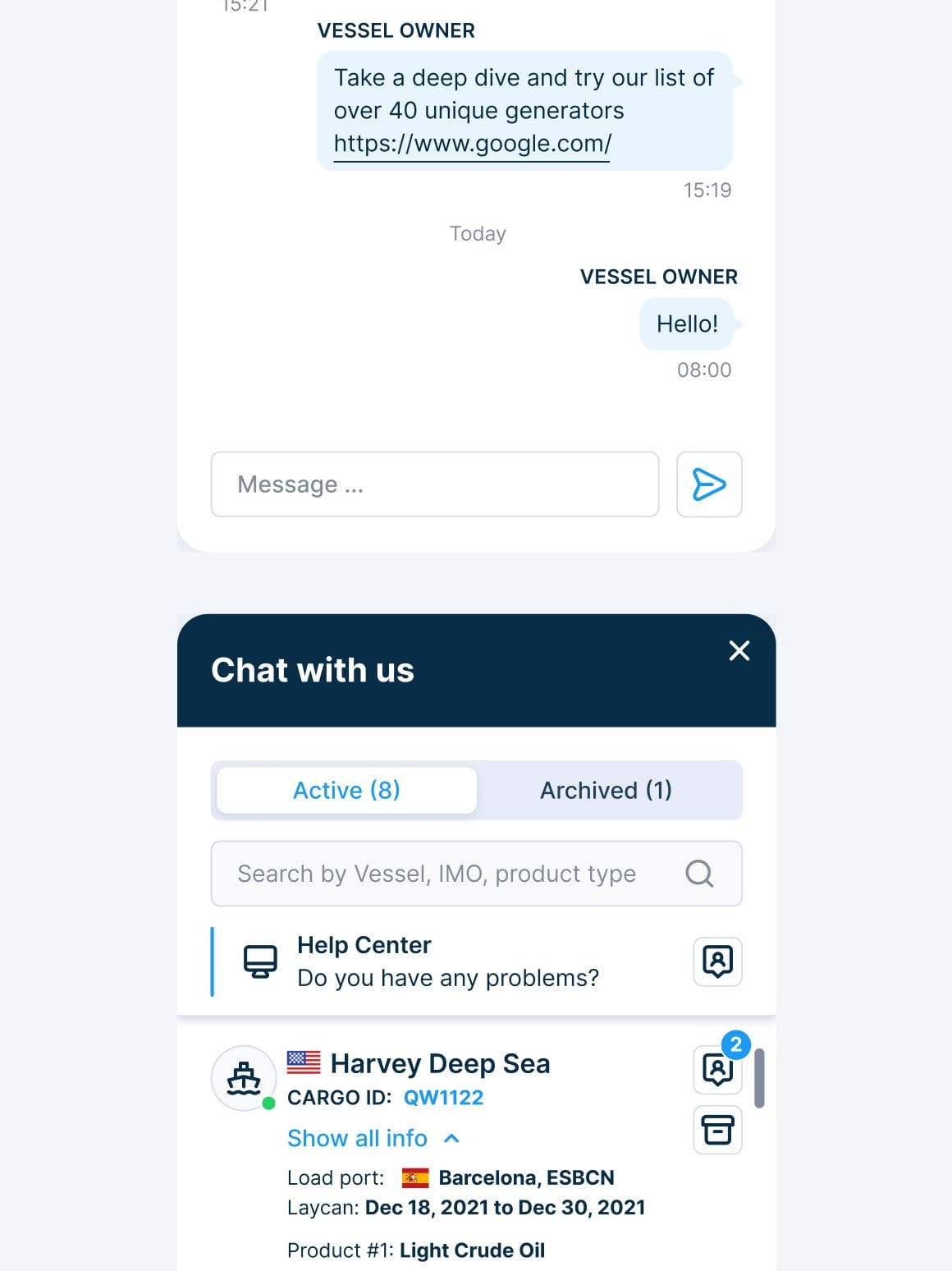
On the Shiplink platform, the entire negotiation cycle runs as a structured digital workflow. A charterer submits deal terms, the system routes them to the relevant vessel owner, and each response is logged automatically. The Shiplink team oversees every active deal as super admin, with real-time visibility across all negotiations and automated alerts at every status change.
Shiplink's admin team operates with full analytical visibility across the platform through a centralized analytics dashboard — covering every deal, counterparty, and document flow happening in real time.
What the dashboard tracks:
Manual freight estimation in shipping brokerage means spreadsheets, experience-based guesswork, and significant exposure to pricing errors on complex routes. Shiplink's AI-powered routing engine replaces that with data-driven predictions generated in seconds.
Charterers input their cargo parameters and the system returns AI-calculated freight costs, shipment durations, and optimal routes — factoring in vessel availability, historical rate data, and route complexity. Multi-leg routes are modeled automatically, giving charterers accurate planning data before an offer is even submitted.
The collaboration between our and the client’s teams has been exemplary, yielding desired outcomes. Our synergy in adopting suitable technological solutions for complex challenges, along with knowledge exchange and innovative approaches, has driven project success. We also appreciate the opportunity to extend our expertise in the logistics industry.
We have a proven track record of building high quality solutions for customers all over the world.
The key to a successful project is a strong business idea backed by real market need, a solid tech solution, and a clear go-to-market plan.